
BOLLYWOOD — WHERE DREAMS TAKE THE SPOTLIGHT
Inside Mumbai’s legendary movie industry, where stories, stars and ambition meet
THE CITY WHERE THE SHOW NEVER STOPS
There are few places on Earth where the boundary between everyday life and the movies feels quite as thin as it does in Mumbai. A crowded street can become a film location. A café can suddenly be filled with actors, writers and producers. A young performer arriving with little more than a suitcase and a dream can find themselves standing outside a casting studio, hoping for the phone call that could change everything.
This is Mumbai — India’s great city of cinema and the beating heart of what the world knows as Bollywood.
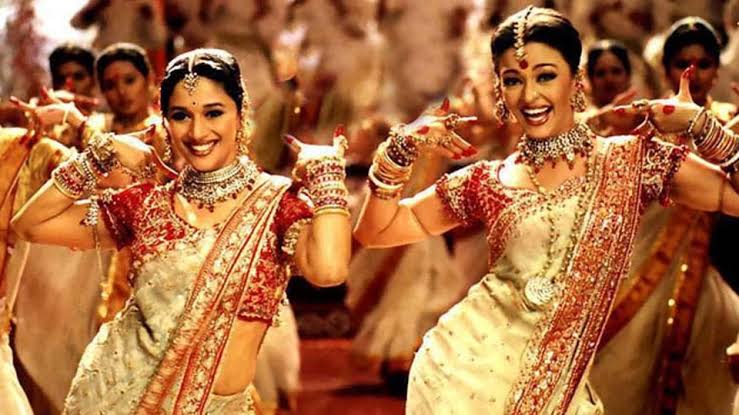
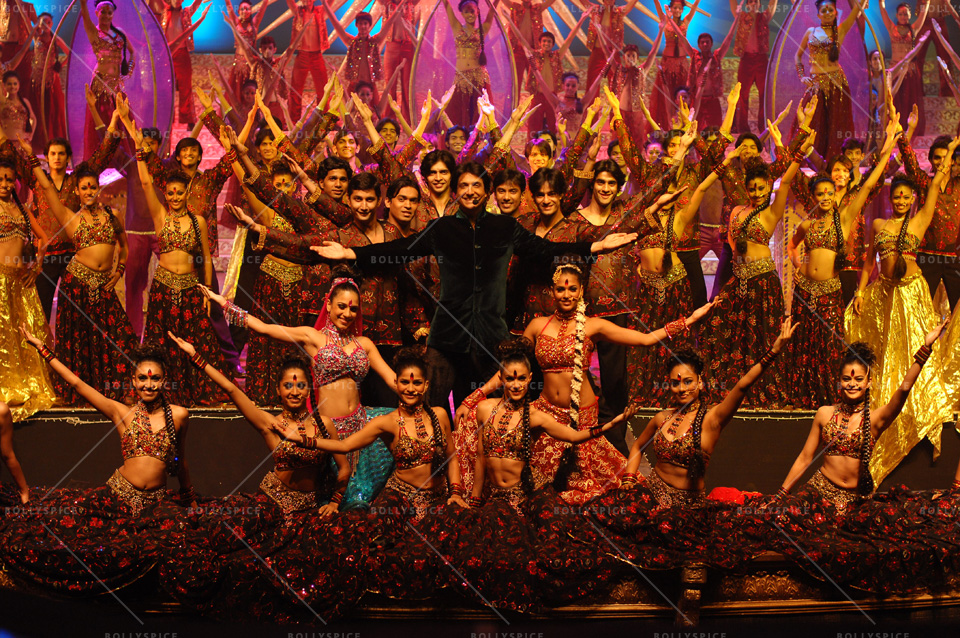
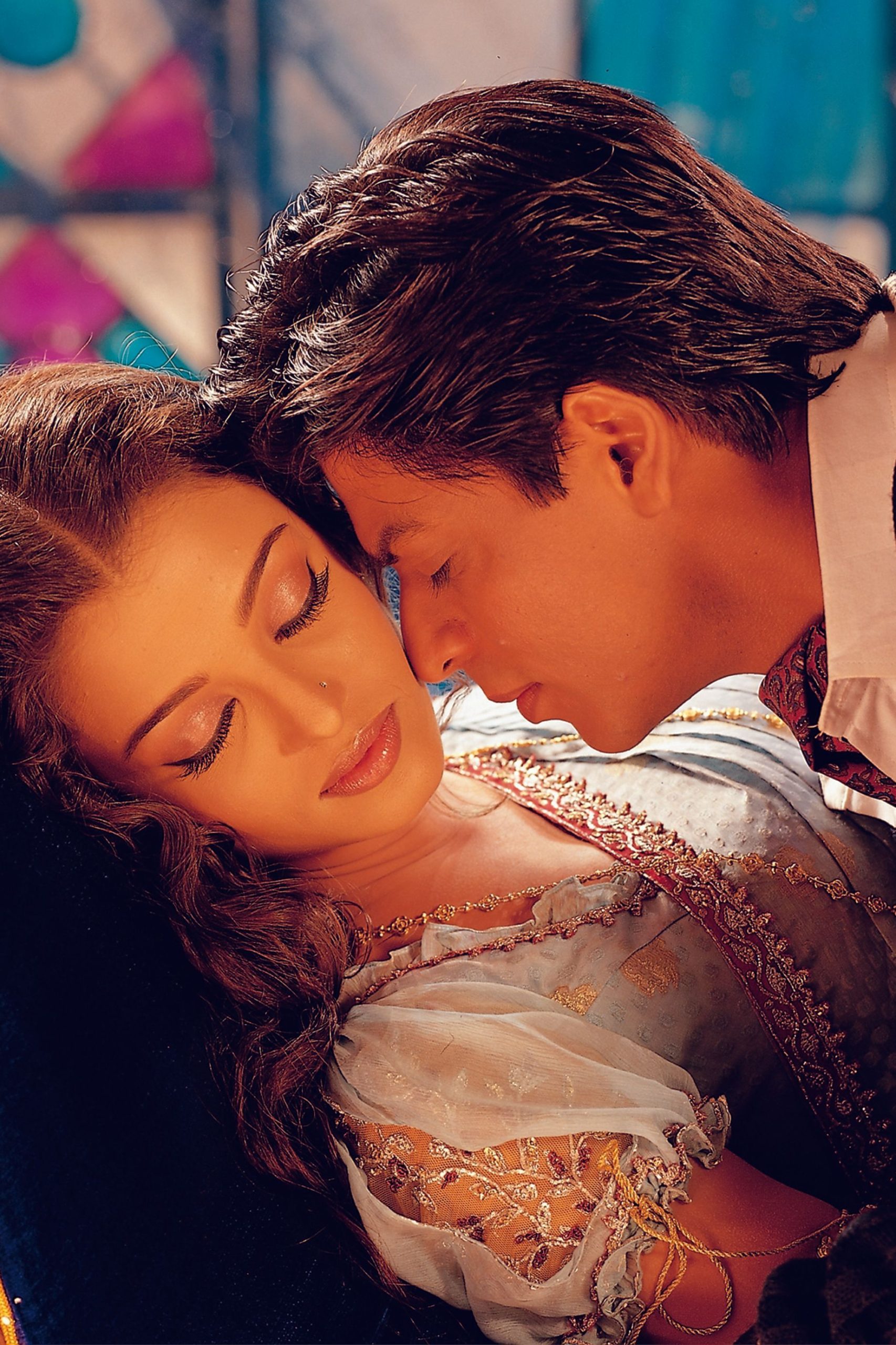
The word itself is a blend of Bombay, the city’s former name, and Hollywood. Yet Bollywood is far more than an Indian version of Hollywood. It has its own language, traditions, visual style and emotional vocabulary. It is a world where music can move the story forward, romance can unfold against spectacular backdrops, comedy can sit beside tragedy, and an ordinary person can become a larger-than-life hero.
For more than a century, Mumbai has been building this cinematic dream.
FROM THE FIRST SCREENING TO A GLOBAL PHENOMENON
Mumbai’s relationship with cinema began remarkably early. In 1896, films by the Lumière brothers were screened at Watson’s Hotel in Bombay, introducing audiences in the city to the new medium of moving pictures. Just seventeen years later, Dadasaheb Phalke made Raja Harishchandra, widely recognised as India’s first full-length Indian feature film.
The foundations of Mumbai’s film culture were strengthened during the following decades. In 1931, Alam Ara became India’s first sound film, marking the beginning of a new era in which dialogue, music and performance could combine on screen. Mumbai’s studios and production companies grew, and the city increasingly became a magnet for creative talent.
The post-independence decades produced some of Indian cinema’s most enduring films and stars. The 1950s and 1960s established a golden era of Hindi cinema, while the 1970s brought the rise of the action-oriented ‘angry young man’ and a new generation of filmmakers. The 1990s and 2000s then transformed Bollywood into an increasingly global phenomenon, with Indian cinema finding enthusiastic audiences across Asia, the Middle East, Africa, Europe and among the Indian diaspora.
Today, Mumbai remains one of India’s principal filmmaking centres. India Cine Hub describes Mumbai as the heart of the Indian movie industry, noting that the city produces a large share of Hindi-language films while also supporting Marathi cinema and a wide range of other screen productions. Importantly, Mumbai’s cinema is not limited to mainstream Bollywood: the city has also been a major home for parallel, independent and more realistic filmmaking.
FILM CITY: THE ENGINE ROOM OF THE DREAM
One of the most recognisable symbols of Mumbai’s movie industry is Dadasaheb Phalke Chitranagari, universally known as Film City, in Goregaon.
Established by the Maharashtra government in 1977, the vast complex was created to provide facilities for film production and to strengthen Mumbai’s position as a centre of cinema. It was renamed Dadasaheb Phalke Chitranagari in 2001 in honour of the pioneering filmmaker.
The scale is impressive. Government and Film City sources describe a complex extending over more than 520 acres, with studios and numerous outdoor locations. Its varied terrain — including wooded areas, water bodies, open spaces, roads, buildings and constructed sets — allows filmmakers to create remarkably different worlds without leaving Mumbai.
Film City has hosted hundreds of productions, and its backlots can transform from a Mumbai street into a village, palace, foreign city or fictional landscape. This is one of the great secrets behind movie magic: what appears on screen as a distant location may actually have been created only a short drive from the city centre.
For visitors, Film City represents something more profound than a collection of studios. It is a physical expression of Mumbai’s filmmaking culture — a place where imagination becomes architecture, costumes become characters and empty spaces become stories.
THE PEOPLE BEHIND THE GLAMOUR
The public face of Bollywood is usually a famous actor walking a red carpet. Behind that image is an enormous creative and technical ecosystem.
A major production can involve directors, producers, screenwriters, cinematographers, editors, choreographers, composers, playback singers, sound designers, costume designers, make-up artists, set builders, stunt teams, lighting crews, production managers, assistants and hundreds of other specialists.
Mumbai’s entertainment economy extends well beyond feature films. Television, streaming platforms, advertising, music videos, live events, theatre, talent agencies, post-production, visual effects and digital content all contribute to the city’s creative landscape.
This concentration of talent is one of Mumbai’s greatest cinematic advantages. An aspiring actor may be able to find an acting workshop, photographer, casting professional, theatre group, dance school and production opportunity within the same metropolitan ecosystem. A composer can collaborate with a lyricist; a choreographer can develop a sequence with dancers; a filmmaker can assemble a technical crew without leaving the city.
That density creates competition, but it also creates possibility. Mumbai attracts people who believe that their next audition, meeting, script or performance could be the beginning of something extraordinary.
THE STARS WHO DEFINED BOLLYWOOD
Every generation of Bollywood has created performers whose names have become part of popular culture.
Dilip Kumar is remembered as one of Hindi cinema’s foundational dramatic actors, while Raj Kapoor became an internationally recognised symbol of Indian cinema through films such as Awaara and Shree 420. Dev Anand brought a distinctive style and charisma to the screen, and Madhubala became one of the most celebrated actresses of the golden era.
Amitabh Bachchan transformed the image of the Hindi-film hero in the 1970s and became one of the defining stars of Indian cinema. His career has continued across generations, making him an extraordinary link between Bollywood’s past and present.
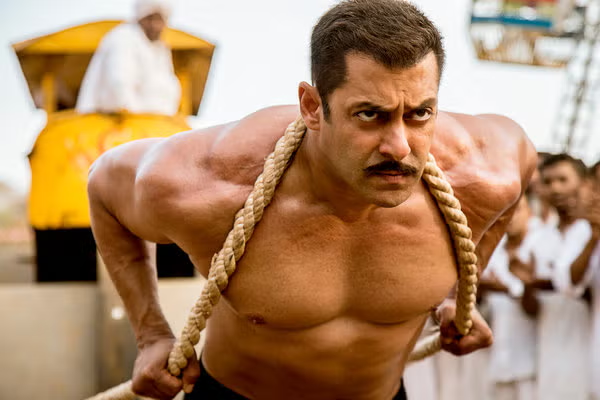
The following decades produced a new constellation of stars. Shah Rukh Khan became globally associated with romantic and dramatic Hindi cinema and built a particularly strong international following. Aamir Khan became known for his work across commercially successful and socially resonant films. Salman Khan became one of the industry’s most recognisable mass-audience stars.
Among later generations, actors such as Akshay Kumar, Ajay Devgn, Hrithik Roshan, Ranbir Kapoor and Ranveer Singh have each developed distinctive screen identities. Leading actresses including Sridevi, Madhuri Dixit, Kajol, Priyanka Chopra Jonas, Deepika Padukone and Alia Bhatt have likewise played major roles in shaping contemporary Hindi cinema.
And Bollywood’s star system extends beyond actors. Legendary playback singers such as Lata Mangeshkar, Asha Bhosle, Kishore Kumar and Mohammed Rafi gave generations of films their emotional voice. Directors, composers, lyricists and choreographers have often become celebrities in their own right.
The important point is that Bollywood has never belonged to one generation. Its greatest strength is its ability to continually introduce new faces while carrying the memory of those who came before.
MORE THAN GLAMOUR: THE BUSINESS OF ENTERTAINMENT
Bollywood may sparkle on screen, but filmmaking is also a serious business. Productions require financing, distribution, marketing, theatre networks, streaming agreements, music rights and increasingly sophisticated digital and visual-effects capabilities.
The industry has also changed dramatically with the arrival of streaming platforms. Audiences can now discover Hindi films and Indian series almost anywhere in the world, while filmmakers can reach viewers without relying exclusively on traditional theatrical distribution.
At the same time, cinema remains deeply connected to the theatrical experience. The opening weekend of a major film can become a cultural event, with fans celebrating stars, music and dialogue as though they are participating in a shared national conversation.
Music remains particularly important. Bollywood songs frequently become hits independently of their films, and dance sequences can become cultural phenomena. A successful song may be heard at weddings, festivals, clubs, restaurants and family celebrations long after the film has left cinemas.
This fusion of cinema, music, fashion and celebrity is one of Bollywood’s defining characteristics.
MUMBAI: THE CITY AS A CHARACTER
What makes Mumbai so valuable to filmmakers is not simply its studios. It is the city itself.
Marine Drive can become a romantic setting. The crowded local railway network can represent the pulse of urban life. Bandra and Juhu bring together celebrity culture, restaurants and coastal neighbourhoods. South Mumbai offers grand colonial-era architecture, while the city’s markets, lanes and working-class districts provide an entirely different visual language.
Mumbai can look glamorous, gritty, romantic, chaotic, sophisticated and intimate — sometimes within the same afternoon.
That variety gives filmmakers an almost limitless palette. A story about ambition can unfold against the skyline. A love story can begin beside the sea. A thriller can disappear into the maze of streets. A dance sequence can transform a familiar public space into something spectacular.
In that sense, Mumbai does not merely host Bollywood. Mumbai is one of its characters.
THE BOLLYWOOD DREAM
Perhaps the most fascinating thing about Mumbai’s film industry is the dream at its centre.
For decades, people from across India and from Indian communities around the world have arrived in the city hoping to become part of the entertainment business. Some find success. Others build careers behind the camera. Many discover that the industry is more demanding than the glamour suggests.
But the dream remains powerful.
Walk through Mumbai and you can feel why. Posters cover cinema walls. Film music pours from shops and cars. Entertainment news appears everywhere. Production trucks move through the streets. Dance schools train the next generation. Theatre groups rehearse in modest spaces. Young performers attend auditions, often competing for a handful of opportunities.
Somewhere among them may be the next great actor, director, singer or filmmaker.
That possibility is fundamental to Mumbai’s identity as a city of cinema.
A LEGACY THAT KEEPS MOVING
More than a hundred years after those first moving pictures arrived in Bombay, Mumbai’s relationship with cinema is stronger and more complex than ever.
The technology has changed. The business model has changed. Audiences have changed. Streaming, digital production, international collaborations and new storytelling formats continue to reshape the industry.
Yet the essential ingredients remain remarkably familiar: a story, a camera, music, performers, an audience — and the belief that for a couple of hours, another world can feel real.
That is the enduring magic of Bollywood.
Mumbai is a city that understands dreams because it has built an entire creative ecosystem around them. From Dadasaheb Phalke’s pioneering work to today’s global stars and digital storytellers, the city’s cinematic journey is a story of ambition, reinvention and imagination.
Come to Mumbai and you may visit the landmarks, explore the studios and search for celebrity sightings. But look a little closer and you will discover something more exciting.
Behind every glamorous premiere, there are thousands of people chasing an idea.
And somewhere in Mumbai, the next story is already beginning.
RESEARCH NOTE
Historical and industry information checked against Incredible India, India Cine Hub/National Film Development Corporation, the Government of Maharashtra’s Film City sources, and Mumbai government resources. Key reference points include the 1896 Lumière screening in Mumbai, Raja Harishchandra (1913), Alam Ara (1931), the establishment of Film City in 1977, and its renaming as Dadasaheb Phalke Chitranagari in 2001.