
Mumbai on a Plate: A City That Eats with Its Whole Heart
An editorial on the flavours, people and restless imagination of Mumbai
The city’s most delicious language
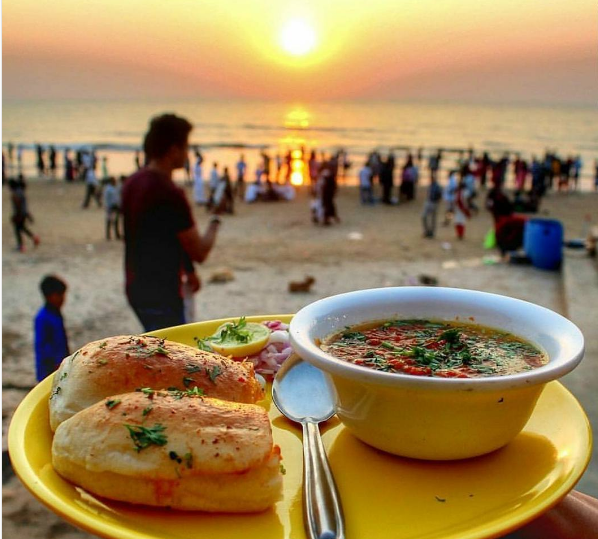
Mumbai is a city that rarely sits still—and its food tells that story better than almost anything else. At dawn, a cutting chai warms hands outside a railway station; by noon, office-goers queue for vada pav; at dusk, families gather over pav bhaji near the sea. Later, a chef may turn kokum, kokani seafood or a familiar chutney into a tasting-menu revelation. These are not separate food worlds. They are parts of one appetite: practical, generous, inventive and always in motion.
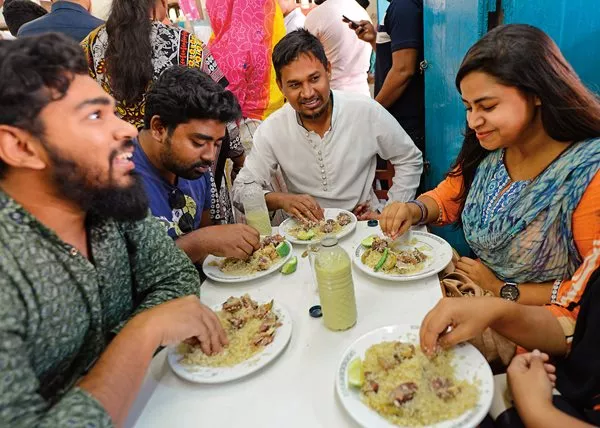
The city’s cuisine is less a single tradition than a conversation among communities. Koli fishing families, Maharashtrian home cooks, Gujarati and Parsi traders, Muslim cooks, South Indian migrants, and generations of newcomers have all helped shape what Mumbai eats. Its plates reflect migration, trade, work, celebration and the simple need to make a satisfying meal between trains.
A harbour of histories and flavours
Long before Mumbai became a global financial centre, its coastal settlements lived by the sea. The Koli community’s fish curries, fried fish and rice-based meals remain essential to the region’s culinary identity. The wider Konkan coast contributes coconut, kokum, tamarind, chillies and fragrant masalas; Maharashtrian cooking brings earthy goda masala, roasted spices, peanuts, sesame and the lively heat of green chilli.
Mumbai’s growth as a port and commercial city brought new tastes and new institutions. Parsi and Irani cafés made their mark with brun maska, kheema pav, omelettes, berry pulao and cups of tea. Their blend of Persian heritage and Indian ingredients became part of the city’s everyday rhythm. Britannia & Co. and Kayani & Co. are enduring names in this café culture. South Indian Udupi restaurants, meanwhile, made idli, dosa, vada and filter coffee accessible across neighbourhoods; Matunga’s Café Mysore, established in 1936, is a landmark of that story.
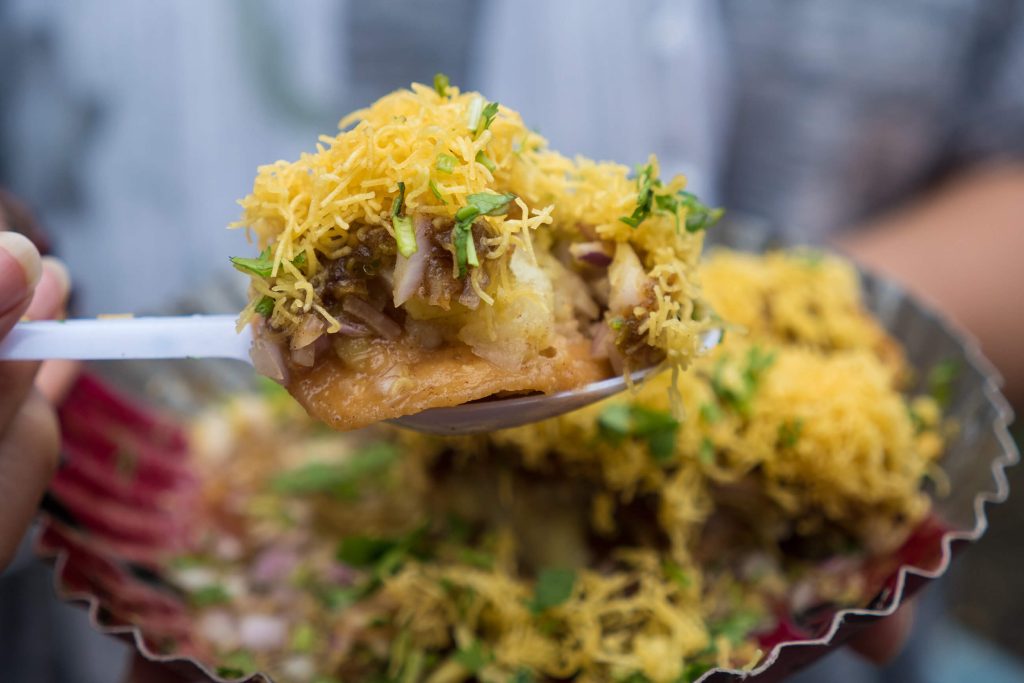
The city’s street food also grew from the needs of workers and commuters: affordable, filling food served quickly. Vada pav—spiced potato fritter tucked into a pav, often with dry garlic chutney and fried green chilli—became an emblem of Mumbai’s democratic food culture. Pav bhaji, bhel puri, sev puri, pani puri, ragda pattice and frankies offer different balances of crunch, tang, heat and comfort. Their popularity is not simply nostalgia; these foods continue to answer the city’s appetite for speed, flavour and value.
Spices, sourness and the Mumbai palate
Mumbai’s flavour is built through contrast. Cumin, coriander, turmeric, mustard seed, fennel, fenugreek, cloves, cinnamon and black pepper form the backbone of many masalas. Garlic, ginger and chilli supply warmth; coconut adds body; kokum and tamarind bring a tart edge; lime, raw mango and fresh coriander brighten the finish. In Maharashtrian kitchens, goda masala lends a rounded, toasted fragrance, while coastal curries may combine coconut with red chilli and kokum. Parsi dishes can bring sweet-sour notes, and street snacks layer chutneys, sev, onion and masala for an exuberant rush of textures.
The drinks belong to the same landscape.
Cutting chai is the city’s everyday pause, served strong and sweet in a small glass. Irani tea and South Indian filter coffee carry their own rituals. On hot days, nimbu pani, sugarcane juice, kokum sherbet and fresh coconut water refresh the walk between errands. Falooda—especially the rich, rose-scented versions found around Crawford Market—turns dessert into a drinkable celebration. Today’s cocktail bars also borrow from the pantry, experimenting with local fruit, spices, herbs and regional spirits.
Where the city’s appetite gathers
Mumbai’s food map is a collection of neighbourhood stages. Mohammed Ali Road is famous for its festive-season food culture and grills; the stalls and eateries around Khau Gallis and station approaches serve snacks to a constant flow of people. Juhu Beach is associated with pav bhaji, bhel and other chaat favourites, while Chowpatty remains woven into the city’s evening promenade. For a more everyday food walk, explore the lanes around Fort and Churchgate, Matunga’s South Indian cafés, or the snack counters of Dadar. Street scenes and vendors change, so go with curiosity, choose busy stalls with high turnover, and check local conditions.
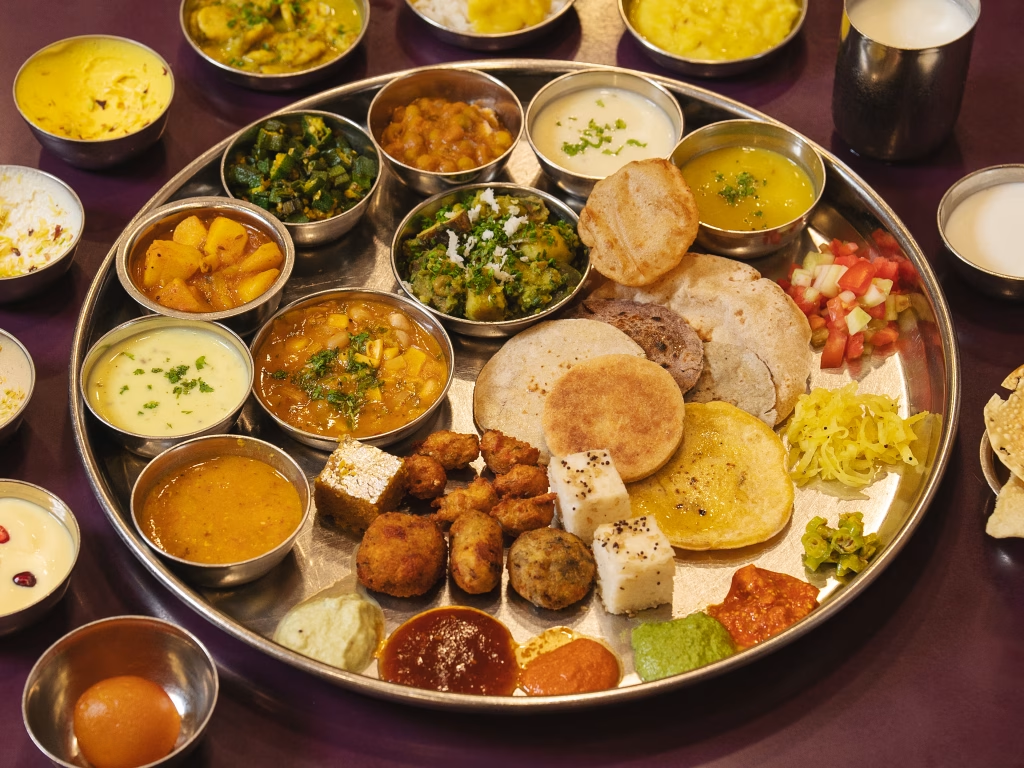
Mumbai’s restaurants preserve memory while giving it new form. Britannia & Co. and Kayani & Co. evoke the Irani café tradition; Trishna is known for coastal seafood; Café Mysore represents the city’s Udupi heritage; and Shree Thaker Bhojanalay is associated with Gujarati thali. In contemporary dining, The Bombay Canteen has helped make regional Indian ingredients and flavours part of a modern restaurant conversation. Indian Accent’s Mumbai outpost brings a contemporary lens to Indian cuisine, while Pali Bhavan and other design-conscious restaurants turn regional references into polished dining experiences. These names are examples of the city’s range, not a fixed ranking: menus, ownership and operations can change, so diners should check current details before visiting.
A new generation, and a living tradition
The modern Mumbai dining scene is increasingly personal and experimental. In 2026, food coverage has highlighted intimate chef-led rooms and micro-restaurants—among them Papa’s in Bandra—where limited seats, set menus and close interaction make dinner feel like a conversation. The same coverage points to new openings across the city, from cocktail-led concepts to international flavours adapted for Mumbai diners. At the landmark Eros Cinema, La Panthera’s newer South Mumbai location adds Spanish-inspired pintxos and wood-fired dishes to the city’s evolving restaurant mix.
Chefs are central to this renewal. Hussain Shahzad, associated with Hunger Inc. Hospitality and Papa’s, is part of a generation exploring how Indian food can be playful, precise and deeply rooted. Thomas Zacharias, founder of The Locavore and formerly associated with The Bombay Canteen, has championed regional ingredients and food traditions. Across the wider Indian culinary conversation, Mumbai-born and Mumbai-based chefs, cooks, bakers and street vendors all contribute to a heritage that cannot be reduced to a few celebrated names. The city’s most consequential culinary artists may be the ones who never appear in a guidebook: the pav bhaji cook who has perfected a griddle, the family café that remembers regulars, or the home cook who knows exactly when the masala is ready.
More than a meal
Mumbai’s food and drink industry is both cultural engine and livelihood. From fishermen and farmers to spice sellers, millers, café owners, delivery workers, bartenders and chefs, its flavour depends on a vast network of labour. Restaurants and street stalls create jobs and draw visitors, while changing rents, ingredient costs, weather, regulation and shifting tastes put pressure on small operators. The future of the city’s food culture depends on making room for both innovation and continuity: supporting neighbourhood businesses, respecting the people behind the counter, and keeping regional food knowledge alive.
To eat in Mumbai is to taste a city negotiating its past and inventing its next chapter. A paper plate of bhel beside the sea and a carefully composed chef’s menu may seem worlds apart, yet both express the same instinct—to take what is at hand and make it vivid. The city’s greatest speciality may be this appetite for reinvention, served hot, shared generously, and never quite finished.
Editorial research notes
Background and contemporary references consulted: Municipal Corporation of Greater Mumbai, Tourism Development Plan (food culture and street-food history); Serious Eats, “Railway Pakoras, Modern Cocktails, and More: Where and What to Eat in Mumbai” (2024); Roadbook, “Insider Guide: the best restaurants in Mumbai” (Jan. 2026); NDTV Food, “Every New Mumbai Restaurant Worth Visiting This Summer” (May 2026); Time Out Mumbai, “Why scoring a seat at Mumbai’s chef’s tables is a big deal right now” (May 2026); Indian Express, report on La Panthera at Eros (Sept. 2026); Times of India, “Brun pav to berry pulao: Iran’s mark on Mumbai’s foodscape” (Apr. 2026). Restaurant mentions are illustrative; verify current hours and menus before visiting.